All Categories
Featured
Table of Contents
Adapting Safety Pruning for local Climate Realities in 2026
Commercial property management in 2026 requires a shift in how outdoor assets are handled. The rising temperatures across the United States, particularly in areas like the local region, have made tree canopy management a matter of structural safety rather than simple aesthetics. High-density urban centers now face intensified heat island effects, where mature trees provide the primary defense against soaring cooling costs. However, maintaining these large trees in 2026 involves more than occasional trimming. It demands a rigorous protocol centered on safety pruning to mitigate risks associated with unpredictable weather patterns and prolonged dry spells.
Safety pruning focuses on the removal of dead, dying, or diseased branches that pose a threat to people and property. In 2026, many property managers find success by integrating Pacific Green Landscape Maintenance Diagnostics into their annual maintenance budgets. This proactive approach identifies weak branch attachments and structural flaws before they result in failure. With wind speeds reaching higher averages in recent years, the "sail effect" of a dense canopy can lead to uprooted trees or snapped trunks. Professional crown thinning reduces this wind resistance by selectively removing internal branches, allowing air to pass through the canopy without compromising the health of the tree.
Data from 2026 shows that neglected trees are 40% more likely to suffer major limb loss during summer storms. These incidents often lead to expensive emergency repairs and potential legal liabilities. By prioritizing structural integrity, commercial sites ensure that their grounds remain accessible and safe for tenants and visitors alike. This level of oversight is no longer optional; it is a fundamental part of maintaining a resilient property in a changing environment.
Modern Clearance Protocols and Building Resilience
Clearance pruning in 2026 has evolved to address the specific needs of modern infrastructure and safety regulations. As commercial buildings incorporate more sensitive technology, such as rooftop solar arrays and advanced HVAC systems, the proximity of tree limbs becomes a significant concern. Clearance protocols now dictate a specific distance—often 10 to 15 feet—between mature branches and building facades. This prevents physical damage from scraping during high winds and limits the path for pests to enter structures.
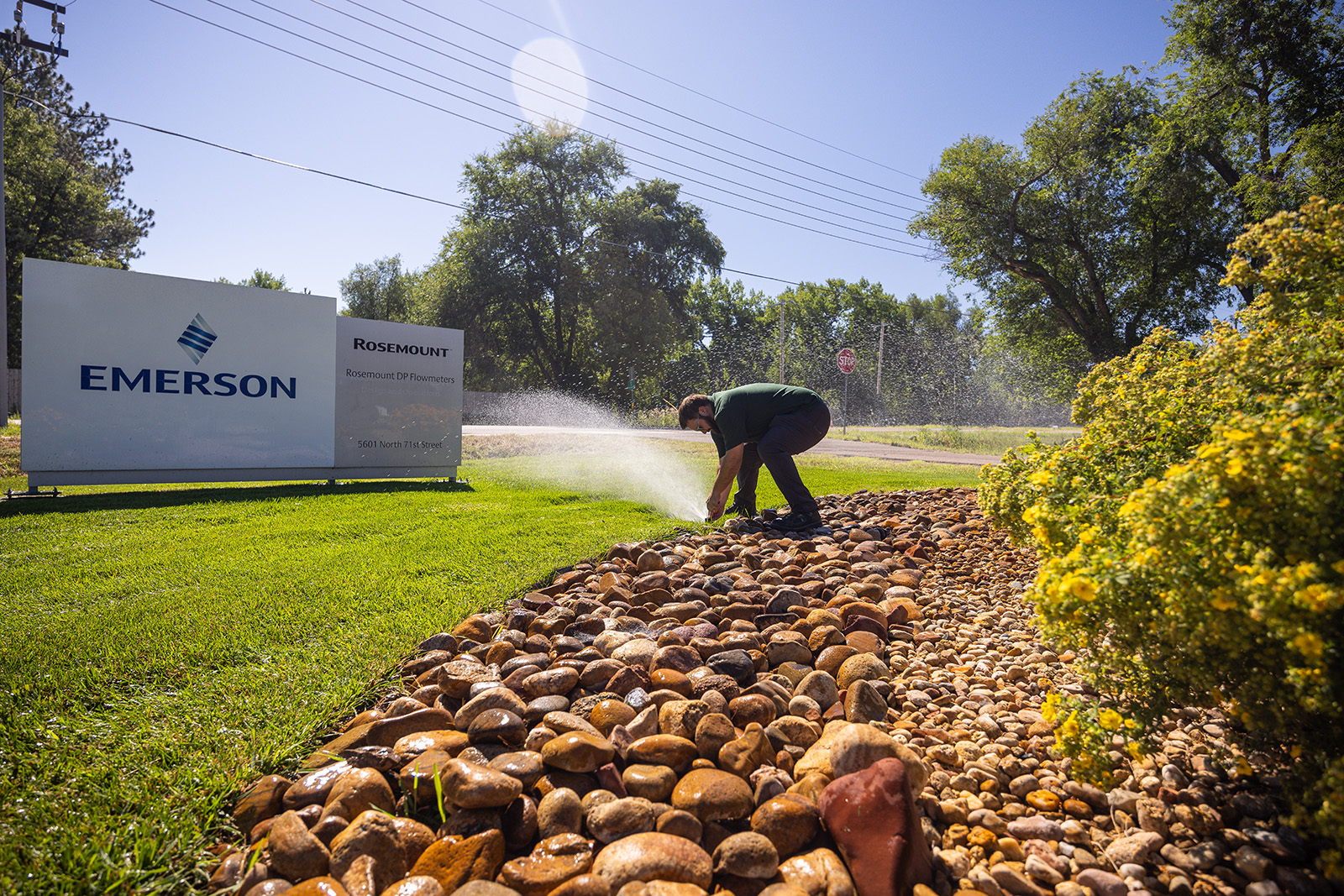
Pacific Green Landscape Maintenance Irrigation System Diagnostics has become a standard requirement for major commercial insurers in 2026. Without documented clearance maintenance, some insurance providers have begun increasing premiums or denying claims related to falling debris. Furthermore, visibility is a key safety metric. Pruning for "sightlines" ensures that security cameras, traffic signals, and entry signage remain unobstructed. This is especially relevant for large retail centers and office parks where pedestrian safety is paramount.
In addition to building clearance, 2026 standards emphasize "lifting" or "raising" the canopy over walkways and parking areas. Standard height clearances are usually set at 8 feet for sidewalks and 14 to 16 feet for emergency vehicle access lanes. These specific measurements ensure that delivery trucks and fire engines can move through a property without hitting overhanging limbs. When executed correctly, this type of pruning does not just clear a path; it also improves the light penetration to the ground, which supports the health of turf and smaller plants underneath the canopy.
Smart Irrigation and Tree Health Synergy in 2026
The health of a tree canopy is directly tied to its hydration levels, yet 2026 water restrictions in the Southwest and other regions have made traditional watering methods obsolete. Smart irrigation systems are now the backbone of successful Irrigation Repair. These systems use sub-surface soil moisture sensors that communicate directly with central controllers. By monitoring the volumetric water content around the root zone, property managers can deliver precisely the amount of water a tree needs to maintain limb flexibility.
Brittle wood is a primary cause of limb failure. When a tree is stressed by drought, it may sacrifice limbs to survive, a phenomenon sometimes called "summer branch drop." In 2026, advanced monitoring allows for the early detection of this stress. Property owners seeking Pacific Green Landscape Maintenance in Southern California find that mid-season inspections prevent emergency expenditures. If the sensors indicate a trend toward extreme dryness, pruning schedules are often adjusted to reduce the overall leaf area, thereby decreasing the tree's demand for water. This synergy between irrigation data and pruning cycles is the hallmark of modern resilience.
Furthermore, smart controllers can be programmed to account for local weather forecasts in your area. If a heatwave is predicted, the system can pre-hydrate the root zone, ensuring the tree has sufficient turgor pressure to withstand the thermal stress. This level of precision prevents the cycle of over-watering and under-watering that often leads to root rot or fungal infections, both of which weaken the structural foundation of the canopy.
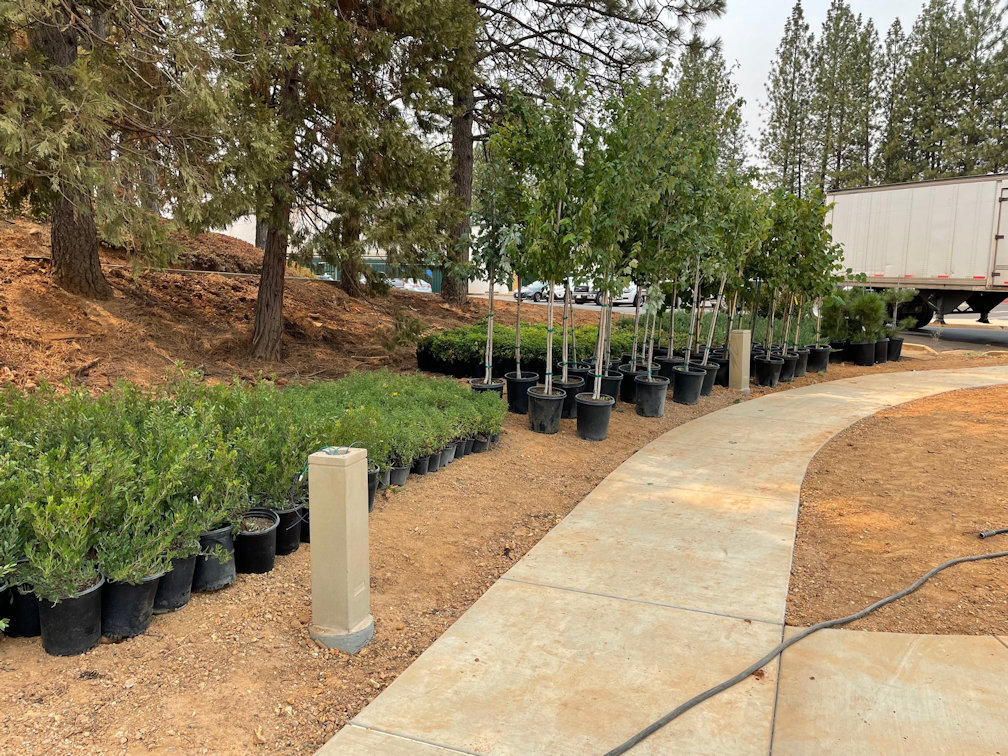
Economic Advantages of Professional Canopy Management
The financial argument for professional canopy management in 2026 is stronger than ever. Beyond the immediate reduction in liability, well-maintained trees significantly impact the market value of commercial real estate. Mature, healthy trees can increase property values by as much as 15%. They provide natural shade that can reduce ambient temperatures on a site by up to 10 degrees Fahrenheit, directly lowering the energy required to cool adjacent buildings. In an era where "green building" certifications are highly prized, the quality of the tree canopy is a measurable metric of success.
Working with specialized Irrigation Repair allows property managers to develop multi-year management plans. These plans move away from the "reactive" model—where trees are only addressed after a branch falls—to a "predictive" model. By spreading the costs of pruning across a three-to-five-year cycle, the annual budget remains stable while the risk of catastrophic failure is minimized. This long-term view is essential for large-scale properties in the surrounding region that house hundreds of trees of varying ages and species.
Technological tools used in 2026, such as drone-based thermal imaging and sonic tomography, provide a non-invasive look at the internal health of a tree. These tools can detect heart rot or hollow cavities that are not visible to the naked eye. Identifying these issues early allows for targeted removals or support systems, such as cabling and bracing, which can extend the life of a heritage tree while keeping the surrounding area safe. The cost of these advanced diagnostics is often a fraction of the cost of property damage or the removal of a dead 50-foot oak.
Establishing a Safety-First Culture on Commercial Grounds
As we move through 2026, the expectations for commercial property safety continue to rise. Local ordinances in the region are becoming more specific regarding the maintenance of urban forests on private land. Compliance with these rules is not just about avoiding fines; it is about contributing to the local community's safety and environmental health. A well-pruned canopy reduces the amount of debris that enters storm drains during heavy rains and helps maintain the air quality in the neighborhood.

Effective management requires a partnership between property owners and professional crews who understand the 2026 standards for safety and clearance. This involves regular training on the latest ANSI A300 pruning standards and a commitment to using the right equipment for the job. In 2026, this might include electric-powered saws to reduce noise pollution on-site and bio-based lubricants to prevent soil contamination. Every decision, from where to make a cut to how to recycle the resulting mulch, reflects a commitment to the resilience of the property.
Maintaining a safe and functional canopy is a continuous process. As trees grow and the environment changes, the protocols must adapt. By combining traditional arboricultural knowledge with the latest smart technology, commercial properties can thrive even in the face of the climate challenges seen throughout 2026. The result is a safer, cooler, and more valuable asset that stands the test of time.

Latest Posts
Removing Risky Limbs via Irrigation Repair Protocols
Why Smart Irrigation Controllers are the Future of Conservation